This week, I had a great opportunity to sit down with Andy Jeffery, Vice President, Family Office Advisory, at Northwood Family Office,[1] to discuss a question frequently raised by clients; “How much should I leave my children and when?” Below we distill our discussion into five questions, providing you with…

Tamar Silverbrook
Tamar Silverbrook is an associate in the Trusts, Wills, Estates and Charities group at Fasken. Tamar’s practice is focused on domestic and international trusts, as well as wills and estate planning. Tamar works closely with clients and/or clients’ advisors to draft the appropriate documents to facilitate estate and business succession plans that fulfill clients’ unique objectives. This includes providing advice on probate planning, disability planning, charitable gifting, asset protection strategies, cross-border estates and tax issues, personal privacy, family law matters and the interpretation of trusts’ provisions and the corresponding scope of authority provided to trustees. Tamar also advises trustees in administrating a range of complex trust matters.
Overview The Ontario government has enabled municipalities to enact a tax on vacant residential units in their regions (Granted under Part IX.1 of the Municipal Act).[1] Each municipality has to pass a By-Law stating the tax rate and conditions of vacancy that, if met, make a property subject to…
Approaching year end, you increasingly may be fielding calls from corporate lawyer peers who are closing transactions in which trusts are involved. For example, trusts may be direct vendors or sellers, or, perhaps HoldCos are the sellers, but one or more trusts own the shares of the HoldCos. This blog…

Overview We frequently hear the notion that the largest wealth transfer in modern history is commencing. With that, clients increasingly share their objective of multi-generational, or dynastic, planning. For me, as an estate planner, an immediate question arises, namely “How can we assist in accomplishing this objective? Evidently, a goal…
This is Part III of my saga on incapacity planning in a corporate context. Part I and Part II can be found respectively at: https://www.allaboutestates.ca/powers-of-attorney-for-property-implications-of-obtaining-a-formal-capacity-assessment/, and https://www.allaboutestates.ca/what-happens-when-a-shareholder-voting-or-a-director-becomes-incapable-powers-of-attorney-for-property-and-shareholder-agreement-drafting-tips/. As a reminder, Part II addressed two situations that we, as estate planners, are commonly asked about: A director becomes incapable – who…
This is Part II of my saga on addressing circumstances of incapacity, Part I can be found at: https://www.allaboutestates.ca/powers-of-attorney-for-property-implications-of-obtaining-a-formal-capacity-assessment/. Part II, being this blog post, addresses two situations that we, as estate planners, are commonly asked about: Director becomes incapable – who can sign for them? Shareholder (voting) becomes incapable…
An estate trustee does not have an obligation to provide a contingent beneficiary with an accounting; nonetheless, some form of accounting is generally done at the request of a contingent beneficiary. If accounts are not provided, a contingent beneficiary may bring an application to compel an estate trustee to pass…
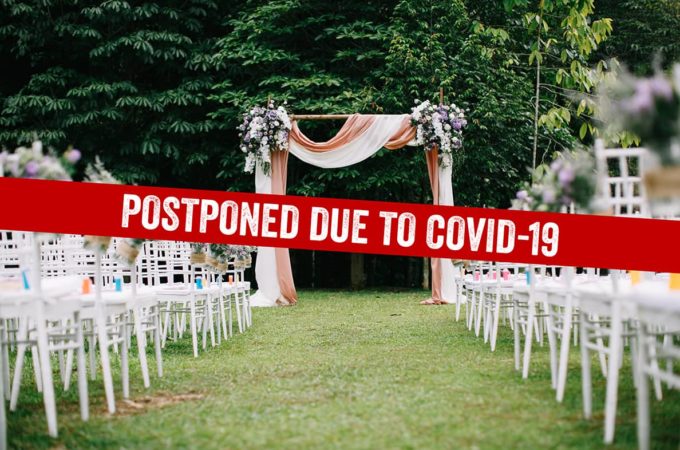
January is kickstarting what seems to be the “Year of the Hats” for me. In addition to my usual winter hat and estate planner hat, this month I’m also fashioning my wedding planner hat, COVID style. As it turns out, planning a February wedding during a COVID lockdown actually means…
Imagine you have an interest in a privately held corporation, which corporation’s underlying assets include a valuable art collection. Perhaps on your death you would like the art collection, or certain pieces, to be given to your closest friend, with the remaining assets (represented by the shares in the corporation)…
Have you ever had this train of thought: ‘what happens now that X is losing capacity? Do I, as the appointed attorney for property, start acting gradually, as needed, or do I obtain a capacity assessment? What are the implications of obtaining versus not obtaining a capacity assessment, particularly when…